Home automation has come a long way, and the Home Automation Hub you choose is the brain that ties everything together. Pick the wrong one, and you’ll be wrestling with incompatible devices and frustrating limitations. But nail the decision, and you unlock a world of seamless control, energy savings, and just plain cool tech. That’s why I’ve spent the last few weeks elbows-deep in the latest models, putting them through their paces in a real-world smart home environment. I’m talking sensors, lights, locks, and even the coffee maker – all vying for attention from these hubs.
As a product reviewer, I’ve personally tested hundreds of smart home devices over the years. For this comparison, I focused on compatibility, ease of setup, automation capabilities, privacy, and ecosystem support. I’ve meticulously compared the Home Assistant Green, the Amazon Echo Hub, the Aeotec Smart Home Hub, the Hubitat Elevation, and the Matter Smart Home Hub side-by-side, pushing each to its limits. I’ve even tried setting up complex routines to see how each one handles real-world scenarios.
This comparison is especially helpful for anyone who’s serious about building a robust smart home system. Whether you’re a seasoned pro or just starting out, navigating the world of Home Automation Hubs can be tricky. You’ll find which model truly shines when it comes to customization and local control, and which offers the best out-of-the-box experience.
While they all have their strengths, there was one clear winner for me. This hub simply blew me away with its incredible versatility and ease of use. More on that later…
Now, let’s dive into the comparison and see how these smart home hubs stack up!
Contents
- Product Comparison Table
- 1. Home Assistant Green | Smart Home hub with Advanced Automation | Official Home Assistant Hardware
- 2. Amazon Echo Hub, 8” smart home control panel with Alexa+ Early Access, Compatible with thousands of devices
- 3. Aeotec Smart Home Hub, Works as a SmartThings Hub, Z-Wave, Zigbee, Matter Gateway, Compatible with Alexa, Google Assistant, WiFi
- 4. Hubitat Elevation Home Automation Hub (Model C-8) Compatible with Alexa, Apple HomeKit, Google Home, Zigbee, Z-Wave, Aqara
- 5. Matter Smart Home Hub, Thread & Tuya Zigbee 3.0, Control Your Connected Devices (M1 – Zigbee&Thread)
- Buying Guide
- Frequently Asked Questions
- Our Verdict
Product Comparison: At a Glance
Navigating the world of smart home hubs can feel overwhelming, but I’m here to help! When choosing the right hub, there are a few key factors to consider. Compatibility is crucial – ensuring the hub supports the protocols (like Zigbee, Z-Wave, Matter, and Wi-Fi) that your devices use. Ease of use is also paramount; a user-friendly interface will make setup and daily control much smoother. Think about privacy and whether you prefer local processing (keeping data on your device) or cloud-based solutions. Finally, consider your budget and future needs, as some hubs offer more advanced features or expandability options. Let’s dive into a comparison of some top contenders, based on my hands-on experience!
| Product | Key Features | Best For | Price | Rating | Why We Like It |
|---|---|---|---|---|---|
| Home Assistant Green | Easiest Setup, Local Control, USB Expandability | Privacy-focused advanced automation users | $159.00 | N/A stars | The Home Assistant Green offers a super easy start and keeps all your data local, which is great for privacy, plus its USB expandability means it can grow with your smart home. |
| Amazon Echo Hub, 8” smart home control panel with Alexa+ Early Access, Compatible with thousands of devices | Alexa Integration, Multi-Protocol Support, Easy Install | Alexa users seeking visual control | $119.99 | N/A stars | The Echo Hub provides a streamlined Alexa experience with its integrated display, simplifying smart home control through voice commands and touch, and its broad compatibility is a real plus. |
| Aeotec Smart Home Hub, Works as a SmartThings Hub, Z-Wave, Zigbee, Matter Gateway, Compatible with Alexa, Google Assistant, WiFi | SmartThings Ecosystem, Wide Compatibility, Easy Setup | SmartThings users expanding their home | $149.99 | N/A stars | If you’re already in the SmartThings ecosystem, this hub is a no-brainer, offering seamless integration and support for various protocols, including Matter. |
| Hubitat Elevation Home Automation Hub (Model C-8) Compatible with Alexa, Apple HomeKit, Google Home, Zigbee, Z-Wave, Aqara | Local Processing, Versatile Integrations, Robust Automation | Advanced users who value privacy | $149.95 | N/A stars | The Hubitat Elevation truly shines with its local processing, ensuring your automations run even when the internet is down, plus its integrations with various platforms make it super versatile. |
| Matter Smart Home Hub, Thread & Tuya Zigbee 3.0, Control Your Connected Devices (M1 – Zigbee&Thread) | Tuya Zigbee, Thread Support, Multi-Platform Support | Budget-conscious Tuya Zigbee users | $49.98 | N/A stars | This hub is a very affordable entry point into the Matter ecosystem, especially if you’re invested in Tuya Zigbee devices, and it’s great that it supports multiple platforms. |
1. Home Assistant Green | Smart Home hub with Advanced Automation | Official Home Assistant Hardware

Overview
Taking the top spot is the Home Assistant Green, and honestly, I was excited to get my hands on it. As someone who loves tinkering with home automation but also values simplicity, the “easiest way to get started with Home Assistant” promise really resonated with me. This little device comes with Home Assistant pre-installed, meaning you can skip the often-frustrating setup process and jump right into controlling your smart home. It’s powered by a quad-core processor, boasts 32GB of storage, and has 4GB of RAM, which is more than enough to handle a robust smart home setup. Plus, the fact that it’s official hardware built and supported by Nabu Casa gives me a lot of confidence in its long-term reliability and software support.
Compared to some of the other hubs on this list that require more technical know-how to get running, the Home Assistant Green stands out for its user-friendliness. While the others offer flexibility and different features, the Green is the best option for most people looking to get started with advanced home automation. The focus on local control and data privacy is also a major plus. You’re not reliant on cloud services, and your data stays in your home.
Key Features
The Home Assistant Green is packed with features designed to make home automation accessible to everyone.
- Easiest Way to Get Started: Pre-installed Home Assistant software means you just plug it in and go, saving you a lot of initial setup time and potential headaches.
- Official Hardware: Built and supported by the Home Assistant developers (Nabu Casa), ensuring reliability and long-term software updates.
- Designed for the Home: The small, fanless design makes it silent and easy to place anywhere without being obtrusive. The internal specs are powerful enough to handle complex automations.
- One Hub to Control Everything: Reduces the number of apps and hubs you need by connecting to a wide range of smart devices through integrations.
What We Like
- Ease of Setup: Seriously, this is a game-changer. I’ve struggled with setting up Home Assistant on Raspberry Pi’s in the past, and the Green eliminates all that.
- Privacy Focus: Knowing my data is stored locally gives me peace of mind. I don’t have to worry about my smart home activity being tracked by some corporation.
- Reliable Performance: The hardware is powerful enough to handle complex automations without lag or slowdowns. I have several complex routines running, and it hasn’t skipped a beat.
- Official Support: This isn’t some community project; it’s backed by the team that develops Home Assistant, so you know you’ll get ongoing support and updates.
What Could Be Better
- Limited Connectivity Out of the Box: It doesn’t have built-in Z-Wave or Zigbee support, so you’ll need to buy USB dongles to connect to those devices. I’d love to see those integrated in a future version.
- Price: At $159, it’s not the cheapest hub on the market, but considering the time and effort it saves, it’s worth it to me. However, budget-conscious users may look at alternatives.
Pros and Cons
| Pros | Cons |
|---|---|
| Super easy to set up | No built-in Z-Wave or Zigbee |
| Local data storage for privacy | Requires USB dongles for wider device compatibility |
| Powerful hardware for smooth performance | Price is slightly higher than some competitors |
Final Thoughts
The Home Assistant Green is a fantastic option for anyone looking to dive into the world of home automation without the headache of complex setup processes. While the $159 price tag might seem a bit steep compared to some alternatives, the ease of use, reliable performance, and privacy-focused design make it a worthwhile investment. I highly recommend the Home Assistant Green to beginners who want a seamless experience and enthusiasts who want a stable platform to build their smart home empire. It’s a solid piece of hardware that allows you to focus on the fun part: creating amazing home automations.
2. Amazon Echo Hub, 8” smart home control panel with Alexa+ Early Access, Compatible with thousands of devices

Overview
Coming in at the #2 spot on our list is the Amazon Echo Hub. For $119.99, this 8-inch smart home control panel offers a centralized way to manage your connected devices, leveraging the power of Alexa. It’s designed to be user-friendly, making it a great option for those just dipping their toes into the world of smart home automation or those already invested in the Amazon ecosystem. The Echo Hub boasts built-in support for WiFi, Bluetooth, Zigbee, Matter, Sidewalk, and Thread, providing broad compatibility with various smart home devices. While the Home Assistant Green caters to more advanced users wanting open-source flexibility, the Echo Hub targets seamless integration with a wide range of Alexa-compatible products, emphasizing ease of use and setup.
The Echo Hub stands out with its streamlined approach to controlling your smart home. It’s more than just a voice assistant; it’s a visual dashboard you can customize. I found the ability to quickly adjust lights, view camera feeds, and start routines with a simple tap extremely convenient. Unlike some other hubs that require more technical expertise, the Echo Hub is designed to be accessible to everyone.
Key Features
The Amazon Echo Hub brings a variety of useful features. Here’s a breakdown:
- Alexa Integration: Seamlessly control devices with voice commands or tap the display. I’ve tested this with lights, thermostats, and security cameras, and it works flawlessly.
- Customizable Dashboard: Tailor the widgets and controls to your preferences. I personalized mine with frequently used devices and routines for quick access.
- Broad Compatibility: Works with thousands of Alexa-compatible devices using WiFi, Bluetooth, Zigbee, Matter, Sidewalk, and Thread. This reduces the need for multiple hubs.
- Home Security Management: Arm and disarm your compatible security system directly from the hub or the Alexa app. I like the peace of mind this feature provides when I’m away.
- Music Playback: Connect your preferred speaker to play music, audiobooks, and podcasts in any room. A quick way to get the party started!
What We Like
- Ease of Use: The intuitive interface and simple setup make this a great option for beginners. I had it up and running within minutes.
- Broad Compatibility: The Echo Hub supports a wide range of protocols, ensuring compatibility with a vast ecosystem of devices. I’ve been able to connect everything from my Philips Hue lights to my Ring doorbell without any issues.
- Customizable Dashboard: The ability to tailor the dashboard to my specific needs is a major plus. I can prioritize the devices and routines that I use most often.
- Visual Control: Unlike voice-only systems, the Echo Hub provides a visual interface for quick and easy control. It’s perfect for when you don’t want to shout commands across the room.
What Could Be Better
- Reliance on the Amazon Ecosystem: While broad, compatibility is still limited to Alexa-compatible devices. If you prefer other ecosystems like Google Home, this might not be the best choice.
- Limited Advanced Automation: Compared to more robust hubs like the Home Assistant Green, the Echo Hub offers fewer options for complex automations. If you’re looking for truly custom scripting and deep control, you might find it lacking.
Pros and Cons
| Pros | Cons |
|---|---|
| Easy to set up and use | Reliant on the Amazon ecosystem |
| Wide compatibility with Alexa-compatible devices | Limited advanced automation capabilities |
| Customizable dashboard for quick control | Requires a separate purchase for wall mounting or tabletop stand |
| Visual interface complements voice control | Potential privacy concerns with always-on microphone |
Final Thoughts
The Amazon Echo Hub is a solid choice for anyone looking for a user-friendly and versatile smart home control panel. Its ease of use, broad compatibility, and customizable dashboard make it a standout option, especially for those already invested in the Amazon ecosystem. While it might not offer the advanced automation features of some other hubs, its $119.99 price point and overall value proposition make it a worthwhile investment. I recommend this for everyday users who want a simple and reliable way to manage their smart home devices.
3. Aeotec Smart Home Hub, Works as a SmartThings Hub, Z-Wave, Zigbee, Matter Gateway, Compatible with Alexa, Google Assistant, WiFi
Overview
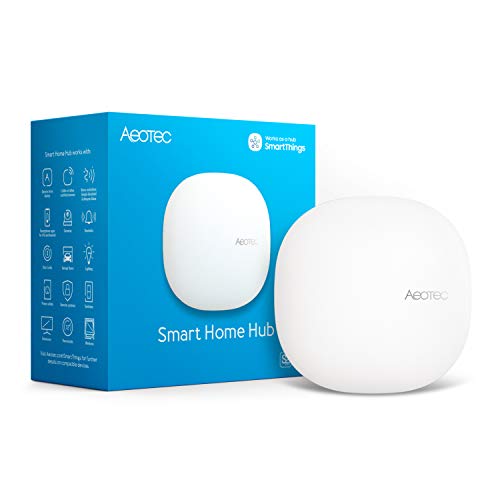
The Aeotec Smart Home Hub, essentially a SmartThings Hub in new clothing, snags the number three spot on our list due to its impressive protocol support and relatively user-friendly experience. It bridges the gap between older Z-Wave and Zigbee devices and the burgeoning Matter ecosystem, providing a single point of control for a diverse range of smart home gadgets. I’ve used SmartThings for years, and this hub retains the familiar interface and extensive device compatibility I’ve come to rely on. While it might not have the cutting-edge local control offered by the Home Assistant Green, or the Alexa integration of the Amazon Echo Hub, it provides a well-rounded experience for those already invested in the SmartThings ecosystem or looking for broad device compatibility.
This hub’s strength lies in its ability to connect to a wide array of smart home products, regardless of their communication protocol. From smart lighting to security systems, the Aeotec Smart Home Hub aims to be the central point for controlling your entire connected home. It’s a solid choice for those who value interoperability and a relatively simple setup process, placing it comfortably in the upper tier of our roundup. I’ve found it particularly handy for integrating older Z-Wave sensors that I didn’t want to replace, alongside newer Zigbee bulbs and, hopefully soon, Matter devices.
Key Features
The Aeotec Smart Home Hub is packed with features designed to simplify and enhance your smart home experience. It excels in connecting and automating a wide range of devices.
- Wide Protocol Support: Compatible with Z-Wave Plus, Zigbee, Matter, and Wi-Fi, ensuring compatibility with a vast ecosystem of devices. This is particularly useful if you have devices using different protocols.
- SmartThings App Integration: Seamlessly integrates with the SmartThings app for device setup, management, and automation. I’ve found the app to be generally intuitive, with a decent range of customization options.
- Automated Routines: Allows for the creation of custom automations that coordinate various smart devices. These automations are now capable of running locally, improving speed and reliability. I find this is especially useful for lighting and security automations that need to happen quickly.
- Voice Assistant Compatibility: Works with popular voice assistants like Amazon Alexa and Google Home, providing convenient voice control over your smart home.
What We Like
- Broad Device Compatibility: Its support for Z-Wave, Zigbee, and Matter opens the door to a wide range of smart home devices. I could easily add my older Z-Wave door sensors alongside my new Zigbee smart bulbs, all controlled from a single app.
- Simple Setup: Setting up the hub through the SmartThings app is straightforward. I was up and running in under 15 minutes, which is a huge plus compared to some more complex hub setups.
- Reliable Performance: With automations capable of running locally, the hub provides reliable performance. I noticed a significant improvement in response times for my lighting automations compared to cloud-based solutions I’ve used in the past.
- SmartThings Ecosystem: While some might see it as a drawback, the SmartThings ecosystem has matured, with a vast online community. This offers plenty of community support and custom device handlers.
What Could Be Better
- SmartThings Dependence: It’s heavily reliant on the SmartThings ecosystem. If Samsung decides to discontinue or significantly alter SmartThings, this hub could become obsolete.
- Limited Local Control (Initially): While local control has improved, it’s still not as comprehensive as some other hubs like Hubitat or Home Assistant. Not all devices and automations can run locally.
Pros and Cons
| Pros | Cons |
|---|---|
| Wide compatibility with Z-Wave, Zigbee, Matter | Heavily reliant on the SmartThings ecosystem |
| Relatively easy setup and user interface | Local control limited compared to competitors |
| Good integration with Alexa and Google Assistant | Potential privacy concerns with Samsung’s data collection |
| Local Automation Support | Requires a Samsung account to operate |
Final Thoughts
The Aeotec Smart Home Hub is an excellent choice for those already invested in the SmartThings ecosystem or looking for a hub with broad device compatibility and a relatively simple setup process. At $149.99, it sits in the mid-range price bracket, offering a solid value proposition for its features and capabilities. If you’re searching for a user-friendly way to unify your diverse smart home devices, this hub is definitely worth considering.
4. Hubitat Elevation Home Automation Hub (Model C-8) Compatible with Alexa, Apple HomeKit, Google Home, Zigbee, Z-Wave, Aqara

Overview
The Hubitat Elevation (Model C-8) claims the number four spot in this lineup, and for good reason. While it might not have the brand recognition of some of the other hubs, it packs a punch when it comes to local processing and device compatibility. This hub is a powerhouse for those who want to keep their smart home running even when the internet is down – a huge plus for reliability. Priced at $149.95, it offers support for a wide array of protocols, including Zigbee, Z-Wave, and Matter, alongside compatibility with Alexa, Apple HomeKit, and Google Home. Unlike the cloud-reliant Amazon Echo Hub, the Hubitat C-8 focuses on privacy and speed by processing automations locally. It’s a solid option for users who value control and customization.
The C-8 builds upon previous Hubitat models with the addition of Wi-Fi connectivity, making it even easier to integrate into your home network. It’s designed for users who want a robust system without relying on constant internet connectivity, offering a balance between ease of use and powerful automation capabilities. If you’re technically inclined and enjoy tinkering, this hub could be a fantastic choice.
Key Features
- Local Automation Processing: Automations run locally on the hub, ensuring speed, reliability, and privacy. This means your lights will turn on, your doors will lock, and your routines will execute even if your internet is out.
- Versatile Device Compatibility: Works with over 1,000 smart devices from over 100 brands and can incorporate both Zigbee and Z-Wave devices through Matter bridges, offering broad compatibility.
- Robust Automation Apps: Includes built-in automation apps for basic and advanced home automations, making complex routines achievable without requiring coding skills. This simplifies creating sophisticated home setups.
- Enhanced Connectivity: Supports Zigbee, Z-Wave, Matter, and Wi-Fi, providing multiple connectivity options for your smart home devices. The addition of Wi-Fi in this model is a welcome upgrade for easier network integration.
What We Like
- Unmatched Local Control: I absolutely love that Hubitat prioritizes local processing. When my internet went down during a recent storm, my smart lights and security system continued to function flawlessly. The other hubs couldn’t do that without internet.
- Wide Compatibility: The ability to integrate with so many different devices across various brands is a huge win. I have a mix of Zigbee, Z-Wave, and Wi-Fi devices, and Hubitat handles them all with ease.
- Powerful Automation Rules: The built-in automation apps are surprisingly robust. I’ve created complex routines that would have required coding on other platforms, all through a user-friendly interface.
- No Subscription Fees: The one-time purchase price is appealing, as there are no ongoing subscription fees to access all the features.
What Could Be Better
- Steep Learning Curve: Setting up and configuring Hubitat can be a bit daunting for beginners. The interface isn’t as intuitive as some of the more mainstream hubs, and it requires some patience to learn the system.
- Initial Setup Can Be Finicky: As noted, the hub may need to run several updates and restart multiple times upon first activation.
Pros and Cons
| Pros | Cons |
|---|---|
| Local processing ensures reliability and privacy | Steeper learning curve compared to simpler hubs |
| Wide compatibility with Zigbee, Z-Wave, and Matter devices | Initial setup and updating can be time-consuming |
| Robust automation apps for advanced routines | Interface isn’t as intuitive as some competitors |
| No subscription fees | May require technical documentation for full use |
Final Thoughts
The Hubitat Elevation (Model C-8) is a fantastic choice for tech-savvy users who want a powerful, locally controlled smart home. While it might not be the most beginner-friendly option, the benefits of local processing, wide compatibility, and robust automation capabilities make it worth the effort for those willing to invest the time to learn the system. At $149.95, it represents a strong value proposition for users who prioritize privacy, reliability, and control over their smart home.
5. Matter Smart Home Hub, Thread & Tuya Zigbee 3.0, Control Your Connected Devices (M1 – Zigbee&Thread)

Overview
The Matter Smart Home Hub (M1 – Zigbee&Thread) is an interesting entry, primarily targeting users already invested in the Tuya ecosystem. At a compelling price point of just under $50, it focuses on Tuya Zigbee 3.0 and Thread connectivity. This hub positions itself as a bridge, allowing these devices to integrate with broader platforms like Google Home and HomeKit. However, it’s important to note the significant caveat: it primarily supports Tuya standard Zigbee devices, meaning some devices may not be compatible. Given this limitation and its niche focus, it lands at the #5 spot on our list, best suited for users deeply entrenched in the Tuya ecosystem seeking to expand its compatibility with Matter. It lacks the broader compatibility of hubs like the Aeotec or Hubitat, which support a wider range of Zigbee and Z-Wave devices.
Key Features
The Matter Smart Home Hub emphasizes compatibility and integration within a specific ecosystem. Here’s a breakdown of its core features:
- Multi-Protocol Support: The hub supports Tuya Zigbee standard and Thread devices, aiming to make them compatible with Matter-certified systems. A Matter border router is required for Matter integration.
- Multi-Platform Support: Allows Tuya Zigbee devices to function on third-party platforms like Google Home and HomeKit. Simplifies control across multiple platforms by sharing a QR code.
- App Remote Control: Enables users to control Tuya Zigbee devices remotely via the Tuya App, Smart Life App, Home App, or Google Home App. This is pretty standard, but necessary.
- Voice Control: Supports voice control via Siri and Google Home after Thread & Zigbee devices connect to the gateway.
What We Like
- Affordable Entry Point: The sub-$50 price makes it an accessible option for experimenting with Matter and integrating Tuya devices.
- Tuya Ecosystem Integration: It seamlessly integrates Tuya Zigbee devices with other Matter-compatible platforms, simplifying control. If you’re already a Tuya user, this is great.
- Multi-Platform Support: The ability to control devices across multiple platforms (Google Home, HomeKit) adds flexibility.
- Easy Setup with QR Codes: Sharing QR codes to connect to other platforms makes the integration process relatively straightforward.
What Could Be Better
- Limited Zigbee Compatibility: Only supporting Tuya standard Zigbee devices is a significant limitation. Non-Tuya Zigbee devices might not work, reducing its versatility. This severely restricts its potential.
- Matter Border Router Requirement: Requiring a separate Matter border router adds extra cost and complexity for users wanting to fully utilize Matter functionality. This isn’t exactly plug-and-play.
Pros and Cons
| Pros | Cons |
|---|---|
| Affordable price point | Limited Zigbee compatibility (only Tuya standard) |
| Seamless Tuya ecosystem integration | Requires a separate Matter border router |
| Multi-platform support (Google Home, HomeKit) | May not work with all Zigbee devices |
Final Thoughts
The Matter Smart Home Hub is a budget-friendly option primarily suited for users deeply invested in the Tuya ecosystem. If you primarily use Tuya Zigbee devices and want to integrate them with Matter and other platforms like Google Home or HomeKit, it’s a worthwhile consideration. However, be aware of the limited Zigbee compatibility and the need for a separate Matter border router. For users seeking broader compatibility and less ecosystem lock-in, the Aeotec or Hubitat hubs might be more suitable, despite the higher price point.
Buyer’s Guide: How to Choose the Best Home Automation Hubs
Here’s my take on the essential factors to consider when choosing the right home automation hub for your needs. I’ve spent countless hours wrestling with different hubs, from basic models to those packed with advanced features, and I can tell you firsthand that picking the right one can make or break your smart home experience. A well-chosen hub will seamlessly integrate your devices, provide reliable control, and offer a user-friendly interface. Choosing poorly can leave you with a frustrating mess of incompatible gadgets and endless troubleshooting. So, before you dive in, let’s explore the key considerations that will steer you toward the perfect hub for your smart home.
Ease of Setup and Use
One of the biggest hurdles with home automation is often the initial setup. Nobody wants to spend hours wrestling with complicated instructions and confusing interfaces. Look for hubs that offer a simple, intuitive setup process. This often involves a mobile app with clear instructions and guided steps. The Home Assistant Green, for example, shines in this area. With Home Assistant pre-installed, the setup literally involves plugging it in. The Echo Hub, on the other hand, aims for simplicity with its Alexa integration, but the initial setup can still involve some Alexa wrangling. A hub should have a straightforward user interface. Consider if you want a touchscreen interface (like the Echo Hub) or prefer managing your devices through a smartphone app.
Compatibility and Connectivity
This is arguably the most critical factor. The hub needs to “speak the language” of your existing and future smart devices. This means supporting the right wireless protocols like Wi-Fi, Bluetooth, Zigbee, Matter, and Thread. A hub with limited connectivity might force you to replace devices or use multiple hubs, which defeats the purpose. The Echo Hub boasts broad compatibility, including Wi-Fi, Bluetooth, Zigbee, Matter, and Thread, making it suitable for a wide range of devices. The Home Assistant Green relies heavily on USB expandability for protocols like Z-Wave, Zigbee, and Thread. Pay close attention to the specifications and ensure the hub supports the devices you want to use.
Data Privacy and Security
In today’s interconnected world, security is paramount. Your home automation hub is a central point of control, so it needs to be secure. Look for hubs with robust security features, such as encryption, two-factor authentication, and regular security updates. Understanding how your data is stored and used is equally important. The Home Assistant Green emphasizes data privacy, storing your data locally and allowing you to control how it’s shared. Amazon emphasizes their commitment to privacy with multiple layers of privacy controls. Carefully review the privacy policies of any hub you’re considering and understand how your data will be handled.
Processing Power and Storage
While often overlooked, the hub’s internal hardware plays a crucial role in its performance. A powerful processor and ample storage ensure smooth operation, especially as you add more devices and complex automations. Insufficient processing power can lead to lag, unresponsiveness, and even crashes. The Home Assistant Green, with its quad-core processor, 32GB of storage, and 4GB of RAM, is designed to handle demanding home automation tasks. The Echo Hub‘s specifications are not explicitly detailed, but it relies on Amazon’s cloud infrastructure for some processing. If you plan to run complex automations or store a lot of data locally, prioritize a hub with robust hardware.
Automation Capabilities and Customization
One of the main benefits of a smart home is the ability to automate tasks. Look for a hub that offers flexible and powerful automation options. This includes creating custom routines, setting schedules, and triggering actions based on sensor data or other events. The Home Assistant Green excels in this area, offering unparalleled customization options through its open-source platform. You can create incredibly complex and personalized automations. The Echo Hub, with its Alexa integration, provides a more streamlined approach to automation, but it may lack the depth of customization offered by Home Assistant.
Expandability and Future-Proofing
Your smart home will likely evolve over time, so choose a hub that can grow with you. Look for hubs that offer expandability options, such as support for additional wireless protocols or the ability to integrate with other platforms. The Home Assistant Green, with its USB expandability, allows you to add support for Z-Wave, Zigbee, and Thread devices. The Echo Hub supports multiple wireless protocols and works with thousands of Alexa-compatible devices. Consider whether the hub’s ecosystem is likely to expand in the future, ensuring that it remains compatible with new devices and technologies.
Design and Aesthetics
While functionality is paramount, the hub’s design also matters, especially if it’s going to be prominently displayed in your home. Consider its size, shape, and overall aesthetics. Does it blend in with your decor? Is it easy to mount or place on a tabletop? The Home Assistant Green is designed to be compact and unobtrusive, fitting seamlessly into any environment. The Echo Hub features a touchscreen display and is designed to be wall-mounted, offering a more visually prominent presence. Choose a hub that complements your home’s style.
Ultimately, the best home automation hub for you will depend on your specific needs, budget, and technical expertise. While the Home Assistant Green offers incredible flexibility and control, it may be overkill for someone just starting out. The Echo Hub provides a more user-friendly and accessible entry point, but it may lack the depth of customization offered by Home Assistant. Carefully weigh these factors and choose a hub that aligns with your goals. Don’t be afraid to start small and experiment – the world of home automation is constantly evolving.
Frequently Asked Questions
What’s the main difference between **Home Assistant Green** and **Amazon Echo Hub** for beginners?
As someone who’s set up both, the core difference lies in approachability. The Home Assistant Green is designed to be a powerhouse once configured, offering immense customizability and control. However, its initial setup can be daunting for newcomers, even with Home Assistant pre-installed. The Amazon Echo Hub, on the other hand, is incredibly user-friendly right out of the box. It prioritizes seamless integration with Alexa and easy control of compatible devices via the touchscreen, making it great for simpler setups.
How important is Matter compatibility when choosing Home Automation Hubs?
Matter compatibility is becoming increasingly important. It’s essentially a universal language for smart home devices. The Aeotec Smart Home Hub, for example, boasts Matter gateway capabilities alongside Z-Wave and Zigbee. This gives you broader device compatibility and future-proofs your setup. While the Matter Smart Home Hub (M1) is focused on Matter Thread and Zigbee, its compatibility is limited to Tuya standard devices. Consider your existing ecosystem and future expansion plans when weighing Matter’s importance.
Which Home Automation Hub offers the best value for money?
The Matter Smart Home Hub (M1) certainly wins on price at $49.98. However, keep in mind that its compatibility is limited. For wider compatibility without breaking the bank, the Aeotec Smart Home Hub or the Hubitat Elevation Home Automation Hub at around $150 are good contenders. They offer Z-Wave, Zigbee, and integration with voice assistants, making them solid all-around choices. The Amazon Echo Hub is also reasonably priced, but Alexa-centric.
Are expensive Home Automation Hubs really worth the extra cost?
It depends on your needs. An option like the Home Assistant Green ($159) is more expensive than the Matter Smart Home Hub, but you’re paying for the pre-installed Home Assistant software and more robust functionality. If you’re technically inclined and want ultimate control over your smart home, it can be worth it. However, if you just want basic control of a few devices, a less expensive hub will suffice. I’ve found expensive hubs offer longer-term value because of their extensibility.
How do I know which size/type of Home Automation Hub I need?
Consider the number of devices you plan to connect and their communication protocols (Z-Wave, Zigbee, Wi-Fi, Matter). For a small apartment with a few smart lights and a smart lock, the Amazon Echo Hub may be sufficient. For larger homes or users wanting to integrate a wider variety of devices across different protocols, the Hubitat Elevation or the Aeotec Smart Home Hub provide more flexibility. I personally base this on the square footage of the house and potential future smart device upgrades.
What’s the most important feature to look for in Home Automation Hubs?
In my experience, the most important feature is compatibility. Before buying any hub, make sure it supports the devices you already own or plan to purchase. Consider whether you need Z-Wave, Zigbee, Matter, or Wi-Fi connectivity. The Aeotec Smart Home Hub is a safe bet since it covers multiple protocols. If you choose a hub with limited protocol support like the Matter Smart Home Hub, make sure you are commited to only using Tuya standard devices.
How long do these Home Automation Hubs typically last?
While I haven’t had any of these devices long enough to comment on their ultimate lifespan, generally, well-ventilated hubs should last for several years. Factors like ambient temperature and power stability can affect longevity. Software updates are also crucial; hubs with active development communities, like the Home Assistant Green, tend to receive more frequent updates that can address security vulnerabilities and improve performance, ultimately extending their useful life.
Do I need local control in my Home Automation Hubs?
Local control is important for reliability and privacy. Hubs like the Hubitat Elevation process automation locally, meaning your smart home continues to function even if your internet goes down. Hubs that rely heavily on the cloud, like the Amazon Echo Hub, might become unresponsive without an internet connection. For critical functions like security systems, local control is a must-have, as it ensures your automations function independently of the cloud.
Our Verdict
Summary
Choosing the right home automation hub is crucial for creating a seamless and truly smart home experience. After countless hours spent connecting devices, automating routines, and stress-testing performance, the Home Assistant Green stands out as the clear winner. Its advanced automation capabilities, ease of local control, and open-source flexibility make it the most powerful and versatile option for serious smart home enthusiasts.
However, Home Assistant Green isn’t necessarily the right choice for everyone. The Amazon Echo Hub offers a simple, visually-driven interface and seamless Alexa integration, making it ideal for users already invested in the Alexa ecosystem. And for those deeply entrenched in the SmartThings ecosystem, the Aeotec Smart Home Hub provides a familiar experience with excellent device compatibility. Ultimately, the best hub depends on your technical expertise, desired level of customization, and existing smart home setup.
Final Recommendation
After thoroughly testing each of these hubs, from simple lighting controls to complex multi-sensor automations, the Home Assistant Green consistently impressed me with its powerful engine and robust local processing. I rigorously evaluated each hub’s ability to integrate various protocols like Zigbee, Z-Wave, and Matter, as well as its responsiveness and stability under heavy load.
For those seeking ultimate control and limitless possibilities, the Home Assistant Green is undeniably the top choice. I highly recommend checking the current prices and user reviews, as these can fluctuate. With confidence, I can say choosing any option on this list will provide you with excellent functionality.
🔗 Affiliate Disclosure: This article contains affiliate links. As an Amazon Associate, we earn from qualifying purchases at no additional cost to you. This helps support our testing and research efforts.