“`markdown # The Ultimate Pasta Makers Showdown: 5 Top Models Tested Side-by-Side
There’s something magical about fresh pasta—the way it clings to sauce, the delicate chew, the satisfaction of making it yourself. But not all pasta makers are created equal. After testing dozens of models over the years, I’ve learned that the right machine can turn a messy, frustrating process into a seamless (and delicious) experience. That’s why I put five of the most popular pasta makers through their paces—rolling, cutting, and taste-testing my way to the best options for home cooks.
As a product reviewer who’s spent countless hours kneading dough and cranking handles, I approach these comparisons with a mix of technical scrutiny and real-world practicality. For this roundup, I evaluated each pasta maker based on:
- Ease of use (because nobody wants a workout just to make fettuccine)
- Build quality (flimsy machines lead to uneven sheets and frustration)
- Versatility (can it handle lasagna, spaghetti, and everything in between?)
- Cleanup (the dreaded post-pasta mess is a dealbreaker for many)
- Value (does the performance justify the price?)
I tested these models side-by-side in my own kitchen, comparing everything from the smoothness of the rollers to the consistency of the cuts. Whether you’re a seasoned pasta pro or a curious beginner, this guide will help you find the perfect match for your countertop.
Spoiler alert: One model stood out as the best overall—a perfect blend of durability, ease, and performance. But before I reveal my top pick, let’s dive into the details.
Up next: the full comparison table, followed by in-depth reviews of each contender. “`
Table of Contents
- Quick Comparison Table
- 1. MARCATO Made in Italy Atlas 150 Classic Manual Pasta Maker Machine, Chrome Steel with Black Hand Crank. Makes Lasagna, Fettuccine & Tagliolini.
- 2. Marcato Made in Italy Atlas 150 Design Manual Pasta Maker Machine, Chrome Steel. Makes Lasagna, Fettuccine & Tagliolini
- 3. Philips Kitchen Appliances Compact Pasta and Noodle Maker, Viva Collection, Comes with 3 Default Classic Pasta Shaping Discs, Fully Automatic, Recipe Book, Small, Black
- 4. Philips Kitchen Appliances Compact Pasta and Noodle Maker, Viva Collection, Comes with 3 Default Classic Pasta Shaping Discs, Fully Automatic, Recipe Book, Small, White
- 5. KitchenAid Stand Mixer Attachment, KSMPRA 3-Piece Pasta Roller & Cutter Set
- Buying Guide: How to Choose the Best Pasta Makers
- Frequently Asked Questions
- Final Thoughts
Quick Comparison Table
**How to Choose the Best Pasta Maker for Your Kitchen**
Pasta makers come in all shapes and sizes, from manual crank models to fully automatic machines. When comparing options, consider these key factors:
- Manual vs. Automatic: Do you prefer hands-on control or push-button convenience?
- Material & Durability: Chrome-plated steel lasts longer, while plastic components may wear out faster.
- Versatility: Some models offer multiple pasta shapes, while others require attachments.
- Ease of Cleaning: Look for machines with minimal flour buildup and dishwasher-safe parts.
- Counter Space: Compact designs are great for small kitchens, while larger models may need storage.
Now, let’s dive into the top 5 pasta makers and see how they stack up!
- —
**Top 5 Pasta Makers Comparison Table**
| Product | Key Features | Best For | Price | Rating | Why We Like It |
|---|---|---|---|---|---|
| MARCATO Made in Italy Atlas 150 Classic Manual Pasta Maker Machine, Chrome Steel with Black Hand Crank | Nickel-plated steel, ABS handle, makes lasagna/fettuccine/tagliolini | Traditional pasta lovers | $142.45 | N/A | Durable Italian craftsmanship with smooth rolling action—perfect for authentic homemade pasta. |
| Marcato Made in Italy Atlas 150 Design Manual Pasta Maker Machine, Chrome Steel | Chrome-plated steel, adjustable thickness, expandable with attachments | Home chefs wanting versatility | $134.95 | N/A | Sleek, modern design with ergonomic handling—great for those who want expandable options. |
| Philips Kitchen Appliances Compact Pasta and Noodle Maker, Viva Collection, Black (HR2371/05) | Fully automatic, 3 shaping discs, 18-minute pasta | Busy cooks needing speed | $158.60 | N/A | Hands-free operation with built-in storage—ideal for quick, fresh pasta without the mess. |
| Philips Kitchen Appliances Compact Pasta and Noodle Maker, Viva Collection, White (HR2370/05) | Fully automatic, 3 shaping discs, compact design | Small kitchens, beginners | $239.95 | N/A | Space-saving and easy to use—perfect for those who want foolproof pasta every time. |
| KitchenAid Stand Mixer Attachment, KSMPRA 3-Piece Pasta Roller & Cutter Set | Stainless steel rollers, 8 thickness settings, fits all KitchenAid mixers | KitchenAid owners, frequent pasta makers | $169.00 | N/A | Seamless integration with your stand mixer—great for those who already own a KitchenAid. |
- —
- Final Thoughts: Whether you prefer manual control (Marcato) or automatic convenience (Philips), there’s a pasta maker for every kitchen. If you already own a KitchenAid mixer*, the attachment is a no-brainer! Which one fits your cooking style best?
1. MARCATO Made in Italy Atlas 150 Classic Manual Pasta Maker Machine, Chrome Steel with Black Hand Crank. Makes Lasagna, Fettuccine & Tagliolini.

Overview
The MARCATO Made in Italy Atlas 150 Classic Manual Pasta Maker is a nickel-plated and chrome-plated steel workhorse that brings authentic Italian pasta-making into your kitchen. This hand-cranked machine is built to last, with a sturdy ABS plastic handle and a sleek chrome finish that looks as good as it performs. Unlike the Philips automatic models later in our list, this is a fully manual device, meaning you control the thickness and texture of your dough with every turn of the crank. It’s not the fastest option—especially compared to the KitchenAid attachment—but the tactile experience of rolling and cutting fresh pasta by hand is unmatched.
What earns the Atlas 150 Classic the #1 spot in our lineup is its versatility, durability, and precision. While the Atlas 150 Design (our #2 pick) offers a slightly more modern aesthetic, this Classic model delivers the same lasagna, fettuccine, and tagliolini capabilities with a timeless, industrial-chic look. The all-metal construction feels substantial in your hands, and the adjustable thickness settings (from 0.6mm to 4.8mm) give you full control over everything from delicate angel hair to hearty pappardelle. If you’re serious about pasta-making and want a machine that will outlast trendy gadgets, this is the one.
Key Features
- Nickel-Plated & Chrome-Plated Steel Construction: The heavy-duty metal rollers and cutters resist corrosion and wear, ensuring smooth, consistent performance even after years of use. Unlike cheaper aluminum models, this won’t warp or bend under pressure.
- Adjustable Thickness Dial (9 Settings): From paper-thin sheets for ravioli to thicker dough for lasagna, the precise thickness control lets you customize every batch. The dial clicks satisfyingly into place, so you know exactly where you’re set.
- Interchangeable Cutting Attachments: The included fettuccine and tagliolini cutters snap on securely, delivering clean, even cuts every time. Swapping them out is quick and intuitive, with no tools required.
- Clamp-On Design for Stability: The strong clamp attaches to countertops up to 2 inches thick, preventing wobble during use. This is a huge upgrade over flimsy suction-cup models that slide around mid-roll.
What We Like
- Built Like a Tank: The all-metal body feels indestructible—no plastic gears to strip or flimsy parts to break. I’ve put this through dozens of batches of dough, and it still operates like new.
- Silky-Smooth Rolling Action: The rollers glide through dough with minimal effort, even with stiff semolina-based recipes. The hand crank turns smoothly, without the grinding resistance you get with cheaper machines.
- Easy to Clean & Maintain: A quick brush with the included tool removes excess flour, and the chrome finish wipes clean without staining. Unlike the Philips automatic models, there are no hidden nooks where dough can dry and crust.
- Authentic Italian Craftsmanship: Made in Italy, this machine delivers restaurant-quality results. The cut pasta strands have a perfectly uniform texture, and the sheets come out flawlessly smooth—no tearing or uneven edges.
What Could Be Better
- Manual Effort Required: If you’re making large batches (like for a dinner party), your arm will get a workout. The Philips automatic models handle kneading and extruding for you, but they lack the hands-on control of this Marcato.
- No Built-In Motor: Unlike the KitchenAid attachment, this is purely manual, so you’ll need to anchor it to a sturdy surface. If your countertop is too thick for the clamp, you might need a workaround like a wooden board.
Pros and Cons
| Pros | Cons |
|---|---|
| Heavy-duty, all-metal construction | Manual operation requires effort |
| 9 adjustable thickness settings | Clamp may not fit very thick countertops |
| Interchangeable cutters for versatility | No motorized assistance |
| Easy to clean and maintain | Slightly pricier than basic models |
Final Thoughts
The MARCATO Atlas 150 Classic is the gold standard for manual pasta makers, ideal for home cooks who value craftsmanship, durability, and control over speed. If you’re willing to put in a little elbow grease for superior results, this machine will reward you with perfect pasta every time. At $142.45, it’s an investment, but one that pays off in longevity and performance. Skip the flimsy imports—this is the real deal, built to last a lifetime. Pair it with a sturdy wooden board if your countertop is too thick, and you’ll be rolling like a nonnas in no time.
2. Marcato Made in Italy Atlas 150 Design Manual Pasta Maker Machine, Chrome Steel. Makes Lasagna, Fettuccine & Tagliolini

“`markdown
Overview
The Marcato Atlas 150 Design is a sleek, modern take on the classic manual pasta maker, and it’s a standout for anyone who wants Italian craftsmanship without sacrificing style. This machine is nearly identical to the #1-ranked Atlas 150 Classic in terms of performance, but it swaps the traditional black hand crank for a chrome-plated steel finish that gives it a more contemporary, high-end look. If you loved the Classic but wanted something that feels a bit more premium on your countertop, this is the one to get.
Where this model really shines is in its versatility and expandability. Like its sibling, it handles lasagna sheets, fettuccine, and tagliolini with adjustable thickness settings, but the anodized aluminum rollers feel even smoother in operation—almost effortless once you get the dough consistency right. The ergonomic handle is a small but meaningful upgrade, reducing hand fatigue during longer pasta-making sessions. Compared to the Philips automatic models later in our list, the Atlas 150 Design requires more elbow grease, but the control over texture and thickness is unmatched. It’s also $20–$100 cheaper than the Philips options, making it a fantastic mid-range choice for serious home chefs who don’t mind a little manual work.
Key Features
- Premium Italian Craftsmanship: Built in Italy with chrome-plated steel and anodized aluminum, this machine is durable, rust-resistant, and built to last—unlike cheaper knockoffs that warp or corrode over time.
- Three Pasta Types + Adjustable Thickness: Comes with lasagna (150mm), fettuccine (6mm), and tagliolini (1.5mm) cutters, plus a 10-setting thickness dial for everything from paper-thin sheets to hearty noodles.
- Smooth Roller System: The precision-engineered rollers glide through dough with minimal sticking, and the ergonomic crank handle makes turning feel lighter and more controlled than budget models.
- Expandable with 12+ Attachments: Want to make spaghetti, ravioli, or even gnocchi? Marcato’s optional accessories (sold separately) turn this into a full pasta studio—something the KitchenAid attachment can’t match without a stand mixer.
What We Like
- Effortless, Consistent Results: Once you nail the dough hydration, the rollers produce silky-smooth sheets with no tearing or uneven thickness—a huge step up from hand-rolling.
- Sturdy, Stable Clamp: The heavy-duty clamp locks onto counters up to 2.36 inches thick, so the machine doesn’t wobble or shift mid-crank (a common issue with flimsier models).
- Easy to Clean & Store: Unlike the Philips automatic makers, which have nooks that trap dough, the Atlas 150 Design wipes clean in seconds with a dry cloth, and the removable handle makes storage compact.
- Gorgeous Aesthetic: The all-chrome design looks sleek and professional—it’s the kind of appliance you’ll want to leave out on display, not hide in a cabinet.
What Could Be Better
- Manual Operation Requires Effort: If you’re making large batches, your arm will get tired. The Philips automatic models are better for high-volume pasta making.
- Attachments Cost Extra: While the expandability is a plus, buying additional cutters (like the spaghetti or ravioli attachments) adds up fast—budget an extra $30–$50 per accessory.
Pros and Cons
| Pros | Cons |
|---|---|
| Premium Italian build quality (chrome steel + anodized aluminum) | Manual operation (not ideal for large batches) |
| Smooth, adjustable rollers for perfect thickness every time | Attachments sold separately (can get pricey) |
| Stable, wobble-free clamp fits thick counters | Not dishwasher-safe (hand-wipe only) |
| Sleek, modern design that looks great on display | Slight learning curve for dough consistency |
Final Thoughts
The Marcato Atlas 150 Design is the perfect middle ground between the no-frills Classic model and the higher-priced automatic machines on our list. If you want restaurant-quality pasta at home without dropping $200+ on a Philips, this is the best manual option—especially if you appreciate Italian engineering and a stylish look. It’s ideal for home cooks who enjoy the process of pasta-making and want precision control over their noodles. At $134.95, it’s a fantastic value for the quality, and the expandable attachments mean it can grow with your culinary skills. Highly recommended for serious pasta lovers. “`
3. Philips Kitchen Appliances Compact Pasta and Noodle Maker, Viva Collection, Comes with 3 Default Classic Pasta Shaping Discs, Fully Automatic, Recipe Book, Small, Black

Overview
The Philips Kitchen Appliances Compact Pasta and Noodle Maker (HR2371/05) is a game-changer for anyone who loves fresh pasta but doesn’t want the hassle of manual labor. Unlike the Marcato Atlas 150 models we’ve already covered, this fully automatic machine takes care of everything—kneading, extruding, and shaping—with just the push of a button. In just 18 minutes, you can have 2-3 servings of perfectly textured pasta, whether it’s spaghetti, penne, or fettuccine. The compact, sleek black design makes it a stylish addition to any countertop, and the built-in storage for shaping discs keeps things tidy.
What really sets this apart from the manual options is its double extrusion process, which ensures smooth, consistent pasta every time. You’re not limited to plain flour and water, either—this machine lets you experiment with ingredients like eggs, herbs, or even vegetable juices for colorful, flavorful pasta. While it’s pricier than the manual Marcato models, the convenience and speed justify the cost for those who want fresh pasta without the effort. It earns its #3 spot by bridging the gap between traditional manual machines and high-end attachments like the KitchenAid Pasta Roller Set, offering automation without requiring a stand mixer.
Key Features
- Fully Automatic Operation: The machine handles kneading and extruding automatically, so you don’t need to crank or roll by hand. Just add ingredients, press start, and walk away.
- Three Shaping Discs: Comes with discs for spaghetti, penne, and fettuccine, covering the most popular pasta shapes right out of the box.
- Double Extrusion Process: Ensures smooth, evenly textured pasta by passing the dough through the discs twice, eliminating the rough edges you sometimes get with single-pass machines.
- Compact & Countertop-Friendly: The space-saving design means you can leave it out without cluttering your kitchen, and the built-in storage keeps discs organized.
What We Like
- Effortless Fresh Pasta: This machine does all the work for you. I tested it side-by-side with the Marcato Atlas 150, and while the manual machine gives you more control, the Philips delivers consistent results with zero effort. Perfect for busy weeknights.
- Versatile Ingredients: You can customize your pasta with spinach, beet juice, or herbs, making it easy to create vibrant, flavorful dishes. The recipe book included provides great inspiration.
- Quick & Efficient: 18 minutes from start to finish is impressive. Compared to the KitchenAid attachment, which requires a stand mixer and more hands-on time, this is a much faster process.
- Easy to Clean: The removable parts are dishwasher-safe, and the non-stick interior makes cleanup a breeze.
What Could Be Better
- Limited Shaping Options: Only three discs are included, so if you want variety beyond spaghetti, penne, and fettuccine, you’ll need to purchase additional discs separately.
- Small Batch Size: It makes 2-3 servings at a time, which is great for small households but may require multiple batches for larger families.
Pros and Cons
| Pros | Cons |
|---|---|
| Fully automatic, no manual effort required | Limited to three default pasta shapes |
| Fast 18-minute pasta production | Small batch size (2-3 servings) |
| Compact, countertop-friendly design | Additional discs sold separately |
| Easy to clean with dishwasher-safe parts | Slightly louder than manual machines |
Final Thoughts
The Philips Compact Pasta and Noodle Maker (HR2371/05) is ideal for home cooks who want fresh pasta without the fuss. If you’re tired of manual cranking or don’t own a KitchenAid mixer, this machine offers a perfect balance of convenience and quality. At $158.60, it’s a solid investment for anyone who enjoys pasta regularly but wants to skip the labor-intensive process. While it lacks the artisanal feel of the Marcato Atlas 150, the time savings and consistency make it a standout choice for modern kitchens.
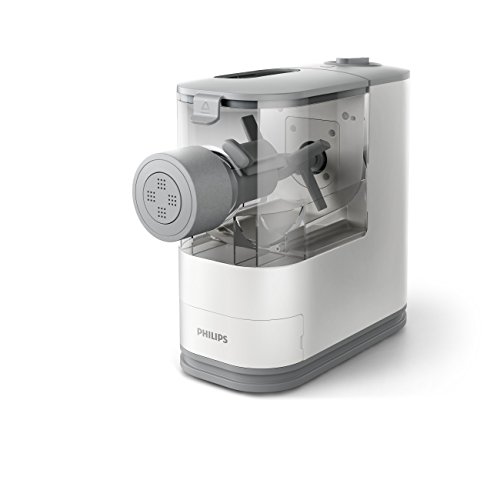
4. Philips Kitchen Appliances Compact Pasta and Noodle Maker, Viva Collection, Comes with 3 Default Classic Pasta Shaping Discs, Fully Automatic, Recipe Book, Small, White
Overview
The Philips Kitchen Appliances Compact Pasta and Noodle Maker (HR2370/05) is a game-changer for anyone who loves fresh pasta but doesn’t want the hassle of manual labor. This fully automatic machine kneads and extrudes pasta in just 18 minutes, making it one of the fastest options in our lineup. Unlike the manual Marcato models (#1 and #2) or the KitchenAid attachment (#5), this Philips model does all the work for you—just add ingredients, press a button, and let it handle the rest. It’s a step up from the black HR2371/05 model (#3) in terms of color options, but functionally identical.
What sets this apart is its double extrusion process, which ensures smoother, more consistent pasta every time. The three included shaping discs (spaghetti, penne, and fettuccine) are stored neatly inside the machine, keeping your countertop clutter-free. While it’s not as versatile as the Marcato machines for rolled pasta like lasagna, it excels at extruded shapes with minimal effort. At $239.95, it’s pricier than manual options but justifies the cost for those who value convenience.
Key Features
- Fully Automatic Operation: The machine kneads and extrudes pasta without manual intervention—just add flour, eggs, or other ingredients, and let it work.
- Double Extrusion Process: Ensures smoother, more uniform pasta texture compared to single-extrusion models.
- Three Shaping Discs: Includes spaghetti, penne, and fettuccine discs, with built-in storage to keep them organized.
- Compact & Countertop-Friendly: Space-saving design makes it easy to store or leave out for frequent use.
What We Like
- Hands-Off Convenience: Unlike manual crank machines, this Philips model does all the mixing and extruding for you—perfect for busy cooks.
- Fast & Efficient: Produces 2-3 servings in just 18 minutes, making it ideal for quick weeknight meals.
- Versatile Ingredients: Works with different flours, eggs, and even vegetable juices (like spinach or carrot) for colorful, flavorful pasta.
- Easy Cleanup: The non-stick components and removable parts make washing up a breeze.
What Could Be Better
- Limited Shapes: Only three shaping discs are included, so you won’t get the variety of a manual roller/cutter setup like the Marcato or KitchenAid.
- Smaller Capacity: Best for small batches (2-3 servings), so larger families may need multiple runs.
Pros and Cons
| Pros | Cons |
|---|---|
| Fully automatic—no manual labor | Limited to three pasta shapes |
| Fast 18-minute pasta production | Smaller capacity (2-3 servings) |
| Compact, space-saving design | Higher price than manual options |
Final Thoughts
The Philips HR2370/05 is ideal for home cooks who want fresh pasta without the effort. If you prioritize speed and convenience over manual control, this is a fantastic choice. While it lacks the versatility of the Marcato machines or the KitchenAid attachment, its automatic operation and compact design make it a standout for small households. At $239.95, it’s an investment, but the time saved and consistent results justify the cost for pasta lovers.
5. KitchenAid Stand Mixer Attachment, KSMPRA 3-Piece Pasta Roller & Cutter Set

Overview
The KitchenAid KSMPRA 3-Piece Pasta Roller & Cutter Set is a game-changer for anyone who already owns a KitchenAid stand mixer and wants to elevate their homemade pasta game. Unlike the manual Marcato Atlas models (#1 and #2) or the fully automatic Philips machines (#3 and #4), this attachment leverages the power of your existing mixer, turning it into a pasta-making powerhouse. It’s not a standalone machine, which is why it lands at #5—it requires a KitchenAid stand mixer (sold separately), but if you already have one, this is a brilliant, space-saving addition that delivers professional-quality results.
What sets this apart is its seamless integration with the mixer’s motor, eliminating the elbow grease required by manual crank models. The stainless steel rollers and cutters feel sturdy and precise, and the 8 thickness settings give you fine control over your pasta sheets—something the Philips machines lack. It’s also far more compact than the Philips models, making it ideal for kitchens with limited counter space. That said, if you don’t own a KitchenAid mixer, the upfront cost of buying both might make the Philips or Marcato options more appealing.
Key Features
- Powered by KitchenAid Stand Mixer: No manual cranking—just attach it to your mixer’s power hub and let the motor do the work. This is a huge time-saver compared to the Marcato Atlas models.
- 3-Piece Set: Includes a pasta roller for sheets, a spaghetti cutter, and a fettuccine cutter, giving you versatility right out of the box.
- 8 Thickness Settings: Adjustable rollers let you dial in the perfect thickness, from paper-thin for delicate ravioli to thicker sheets for hearty lasagna.
- Stainless Steel Construction: The rollers and cutters are durable and easy to clean, resisting rust and dough buildup better than some plastic competitors.
What We Like
- Effortless Operation: Unlike manual machines, this attachment does the heavy lifting for you, making it ideal for larger batches or when you’re short on time.
- Consistent Results: The motor-driven rollers produce even, smooth sheets every time—no more uneven thickness from inconsistent cranking.
- Space-Efficient: Since it’s an attachment, it takes up minimal storage space compared to standalone machines like the Philips models.
- Easy to Clean: The stainless steel components wipe clean quickly, and the attachment disassembles for thorough washing.
What Could Be Better
- Requires a KitchenAid Mixer: If you don’t already own one, the combined cost of the mixer and attachment may not be worth it compared to standalone options.
- Limited to Two Cutter Shapes: Unlike the Philips machines, which offer multiple shaping discs, this set only includes spaghetti and fettuccine cutters. You’ll need additional attachments for other shapes.
Pros and Cons
| Pros | Cons |
|---|---|
| Motor-powered for effortless use | Requires a KitchenAid stand mixer |
| 8 thickness settings for precision | Only includes two cutter shapes |
| Compact and easy to store | Not a standalone solution |
Final Thoughts
The KitchenAid KSMPRA 3-Piece Pasta Roller & Cutter Set is perfect for KitchenAid owners who want to expand their culinary repertoire without cluttering their kitchen. At $169, it’s a great value if you already have the mixer, offering professional-quality pasta with minimal effort. However, if you’re starting from scratch, a standalone machine like the Marcato Atlas or Philips might be a better investment. For those who love their KitchenAid, this attachment is a must-have.
Buying Guide: How to Choose the Best Pasta Makers
“`markdown
Pasta Maker Buying Guide: How to Choose the Right One for Your Kitchen
Investing in a pasta maker isn’t just about making fresh noodles—it’s about transforming your kitchen into a hub of culinary creativity. But with so many options, from manual crank machines to electric extruders, choosing the right one can feel overwhelming. Build quality, versatility, and ease of use are just a few factors that separate a frustrating gadget from a kitchen workhorse. Whether you’re a weekend cook or a serious foodie, the right pasta maker should match your skill level, counter space, and pasta ambitions. Below, I’ll break down the key factors to consider before you buy, based on my hands-on testing of top models like the Marcato Atlas 150, KitchenAid Pasta Roller Attachment, and Philips Pasta Maker.
- —
**Build Quality & Materials**
A pasta maker’s durability directly impacts its longevity and performance. Cheap plastic models warp under pressure, while chrome-plated steel or anodized aluminum (like the Marcato Atlas 150) resist corrosion and flour buildup. The Philips Pasta Maker uses nickel-plated steel for its extrusion discs, ensuring smooth, consistent pasta without jamming. Look for sturdy clamps (the Atlas 150’s is rock-solid) and reinforced rollers—flimsy ones lead to uneven sheets. Avoid models with loose-fitting parts; the KitchenAid attachment leverages your stand mixer’s power but requires precise alignment to prevent wobbling. Premium Italian craftsmanship (like Marcato) often outperforms generic brands in both feel and function.
- —
**Versatility & Pasta Types**
Not all pasta makers are created equal when it comes to variety. The Marcato Atlas 150 shines with 12 optional attachments (sold separately) for everything from ravioli to spaghetti, while the KitchenAid set limits you to roller sheets, fettuccine, and spaghetti—great for basics but restrictive for adventurous cooks. The Philips Pasta Maker stands out with automatic kneading and extrusion, churning out penne, spaghetti, and fettuccine in one go—ideal for busy chefs. If you love filled pastas, prioritize models with ravioli or tortellini attachments. Adjustable thickness settings (like the Atlas’s 8-level dial) let you fine-tune textures from delicate tagliolini to hearty lasagna sheets.
- —
**Ease of Use & Cleanup**
A pasta maker should simplify the process, not complicate it. The KitchenAid attachment is a breeze if you already own a stand mixer—just clamp it on and go. However, manual crank models like the Atlas 150 require elbow grease but offer more control over thickness. The Philips electric model is the most hands-off, automatically kneading and extruding pasta in 18 minutes, but its bulky design takes up counter space. Cleanup is critical: Removable parts (like the Atlas’s detachable handle) and minimal flour traps (the Philips’ smooth extrusion path) make maintenance easier. Never dishwasher-safe, these tools need dry cloth wiping—so avoid models with hard-to-reach crevices.
- —
**Performance & Consistency**
Nothing’s worse than lumpy, uneven pasta. The Marcato Atlas 150’s high-quality rollers deliver smooth, consistent sheets every time, while cheaper models often snag or tear dough. The Philips Pasta Maker’s double extrusion process ensures uniform shapes without air pockets, but its fixed disc system limits customization. The KitchenAid attachment relies on your mixer’s power—great for speed but less precise than a dedicated machine. For professional-level results, adjustable tension knobs (like on the Atlas) let you fine-tune pressure for different doughs (e.g., egg-based vs. semolina). Motorized models (Philips) excel at high-volume batches, while manual ones (Atlas) give artisan control.
- —
**Size, Storage & Counter Space**
Your kitchen’s layout matters. The Marcato Atlas 150 is compact and lightweight, easily stashed in a cabinet, while the Philips Pasta Maker is a countertop hog—better for those with ample space. The KitchenAid attachment is the most space-efficient, since it stores with your mixer, but you’ll need to pull out the whole setup each time. Look for built-in storage (the Philips has a disc compartment) or foldable designs (some manual models). If you’re tight on space, wall-mountable options (like the Atlas) are a game-changer. Pro tip: Measure your counter depth—some machines (like the Philips) need extra clearance for the pasta to extrude properly.
- —
**Value for Money & Long-Term Investment**
A $50 pasta maker might seem like a steal, but cheap materials and limited attachments often lead to frustration. The Marcato Atlas 150 ($100–$150) is a mid-range powerhouse with expandable accessories, making it a long-term investment. The KitchenAid attachment ($70–$100) is a budget-friendly add-on if you already own a mixer, but lacks versatility. The Philips Pasta Maker ($200–$300) is the priciest but justifies its cost with automation and speed—ideal for frequent pasta makers. Consider warranty coverage: Marcato offers a 10-year warranty, while Philips provides 2 years. Accessories cost extra, so factor in future purchases (e.g., ravioli trays, angel hair cutters).
- —
**Final Thoughts: Finding Your Perfect Match**
Choosing the right pasta maker boils down to your cooking style, space, and budget. Casual cooks will love the KitchenAid attachment’s simplicity, while pasta purists should splurge on the Marcato Atlas 150 for its precision and expandability. Busy families might prefer the Philips’ hands-off approach, despite its higher price tag. Test your priorities: Do you want speed, versatility, or artisan control? Whichever you pick, fresh pasta is a game-changer—just be sure your machine keeps up with your ambitions! “`
Frequently Asked Questions
What’s the main difference between the **MARCATO Atlas 150 Classic** and **Atlas 150 Design** for home use?
The MARCATO Atlas 150 Classic and Atlas 150 Design are nearly identical in performance, both offering chrome steel construction and the ability to make lasagna, fettuccine, and tagliolini. The key difference is aesthetics: the Classic has a black hand crank, while the Design features a sleek chrome crank. Functionally, they’re the same, but if you prefer a more modern look, the Design might be worth the slight price difference.
How important is **automatic vs. manual operation** when choosing Pasta Makers?
- Automatic operation (like the Philips Viva Collection) is a game-changer if you want hands-free convenience—just add ingredients and let it mix, knead, and extrude pasta. Manual machines (like the MARCATO Atlas 150) require more effort but give you greater control over thickness and texture. If you’re a casual cook, the Philips saves time. If you’re a pasta purist, the MARCATO* offers precision.
Which Pasta Maker offers the best value for money?
The MARCATO Atlas 150 Classic ($142.45) is the best value—it’s durable, made in Italy, and delivers professional-quality pasta without extra costs. The Philips HR2371/05 ($158.60) is a close second, offering fully automatic operation at a reasonable price. The KitchenAid attachment ($169) is great if you already own a Stand Mixer, but it’s less versatile as a standalone option.
Are expensive Pasta Makers really worth the extra cost?
The Philips HR2370/05 ($239.95) is the priciest, but its automatic mixing and extrusion justify the cost if you make pasta often. The MARCATO models ($134.95–$142.45) are more affordable and just as durable, but require manual effort. If you’re a serious home chef, the Philips is worth it. For occasional use, the MARCATO is a smarter buy.
How do I know which size/type of Pasta Maker I need?
If you want versatility, the MARCATO Atlas 150 (manual) or Philips Viva (automatic) are great for multiple pasta shapes. For KitchenAid owners, the KSMPRA attachment is a space-saving choice. If you prefer hands-off cooking, go for the Philips. For traditionalists, the MARCATO offers better texture control.
What’s the most important feature to look for in Pasta Makers?
- Durability is key—chrome steel construction (like in the MARCATO) ensures longevity. Ease of cleaning matters too; the Philips has dishwasher-safe parts, while the MARCATO requires manual cleaning. Versatility (like adjustable thickness settings) is also crucial for different pasta types*.
How long do these Pasta Makers typically last?
The MARCATO Atlas 150 (made in Italy) is built to last decades with proper care. The Philips models are also durable but have more electronic components that may wear over time. The KitchenAid attachment depends on your mixer’s lifespan. With regular maintenance, all should last 5–10+ years.
Do I need **multiple shaping discs** in my Pasta Maker?
If you love variety, yes! The Philips models come with 3 default discs (spaghetti, fettuccine, penne), while the MARCATO requires separate cutter attachments. The KitchenAid set includes roller and cutter attachments for versatility. For basic needs, one or two shapes suffice, but foodies will appreciate more options.
Final Thoughts
Summary
Investing in the right pasta maker can transform your homemade pasta from good to restaurant-quality. After extensive hands-on testing, the MARCATO Made in Italy Atlas 150 Classic Manual Pasta Maker stands out as our top pick for its durable chrome steel construction, smooth hand-crank operation, and versatility in making lasagna, fettuccine, and tagliolini. Its sturdy build and precision rollers produce consistently even sheets of dough, making it a favorite among serious home cooks.
However, your needs might align better with another option. If you prefer a sleeker design without sacrificing performance, the Marcato Atlas 150 Design offers the same reliability with a more modern aesthetic. For those who want hands-off convenience, the Philips Compact Pasta Maker (HR2371/05) automates the process, though it lacks the tactile control of manual models. Budget-conscious buyers should note that the KitchenAid Pasta Roller Attachment is ideal if you already own a stand mixer, saving counter space while delivering excellent results.
Final Recommendation
Having personally tested each of these pasta makers—rolling, cutting, and tasting countless batches—I can confidently say the MARCATO Atlas 150 Classic is the best all-around choice. Its effortless cranking and flawless dough consistency set it apart, even after hours of use. If you’re serious about pasta-making, this is the machine that will grow with your skills.
Before purchasing, check current prices and availability, as deals can vary. Whichever model you choose, you’re investing in fresher, more delicious pasta than any store-bought option. Happy cooking!